What it costs to own a home in Jacksonville, FL
The median homeowner with a mortgage in Jacksonville, FL spends about $1,765 a month to keep the house, of which property taxes are about $2,401 a year. That is the full cost of owning, not just the loan payment. It includes the mortgage, property taxes, insurance, utilities and any HOA fees. It decides whether staying is affordable, and it is the number people underestimate when they buy.
US Census Bureau, American Community Survey 5-year estimates averaging 2019 to 2023. They show the usual cost of owning here, not this month.
- Monthly, with a mortgage
- $1,765
- Monthly, mortgage paid off
- $563
- Property taxes
- $2,401/yr
- Spending over 30% of income
- 26.8%
All in: loan, taxes, insurance, utilities
What ownership costs with no loan at all
Median for the metro
Of 275,875 mortgaged households
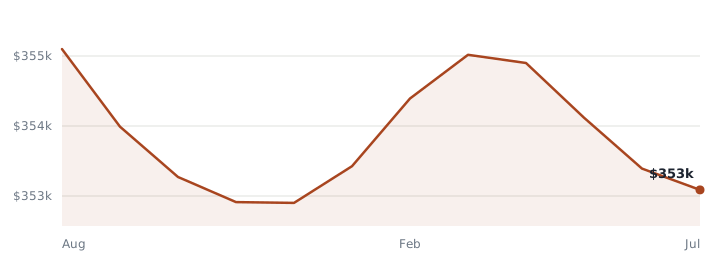
How many people here are stretched
About 26.8% of Jacksonville homeowners with a mortgage spend more than 30% of their household income on housing. HUD and the Census Bureau call a household cost burdened once housing takes more than 30% of income. That is where housing starts crowding out everything else. Roughly 275,875 households here carry a mortgage. That is close to typical for a US metro. It still means about one mortgaged household in four spends more on housing than the standard says it can comfortably afford.
Across the 100 largest metros we track, that is the 44th highest share of stretched homeowners. Property tax makes up about 11% of the yearly cost of holding a house here. Nearby, Deltona at $1,598 and Lakeland at $1,609 are cheaper to hold each month, while Orlando at $1,877 and Tampa at $1,813 are pricier.
On the other half of the picture, houses in Jacksonville take about 80 days on average to go under contract. So even where a normal sale is the right answer, it is not a quick fix for a monthly cost problem.
The house with no mortgage on it
Owners in Jacksonville who have paid off the mortgage still spend about $563 a month, compared with $1,765 for owners still paying one. That money goes to taxes, insurance, utilities and upkeep, and it does not stop when the loan does. So an inherited house with no mortgage can still cost more than the family can afford to keep. "There is no mortgage" is not the same as "there is no hurry".
What actually pushes the number up
The monthly figure above is a median across Jacksonville, FL. Medians hide what causes trouble: these costs do not move together, or predictably.
- Insurance. The most volatile cost, and the one least tied to what you paid for the house. In FL this is the cost that has moved most. Insurers have raised premiums sharply, and some have cut back, dropped policies, or stopped writing new ones in the most exposed areas. A renewal letter often turns a household that was managing fine into one that is not.
- Reassessment. Property tax follows assessed value. A sale, an improvement or an area-wide revaluation can reset it well above the $2,401 median. Inheriting a long-held house often triggers exactly this. In Jacksonville the tax bill alone is about 11% of the yearly cost of holding the property.
- Deferred maintenance. Not in any of these figures. A roof, a furnace or a sewer line comes as one big bill, not a monthly one. It is usually what turns a manageable house into one you cannot keep up with. A single $15,000 repair is about 8 months of everything else a Jacksonville owner pays.
- Income, not cost. Cost burden is a ratio. A retirement, a divorce or a lost job moves it just as sharply as a rising bill, with no change to the house. At $1,765 a month, a Jacksonville household needs about $71,000 a year to stay under the 30% line. Losing a second income is usually what pushes a household over it, not a change in housing costs.
If keeping it no longer works
Nothing on this page says you should sell. Most people with high housing costs should not. First try refinancing, appealing an assessment, shopping for new insurance, or adding income. Those cost less than taking a discount on the biggest thing you own.
Selling to a cash buyer makes sense when those routes are closed and a normal sale is closed to you too. Maybe the house needs work you will not pay for, a tenant is in place, or it is full of a parent's belongings. Or something other than your choice sets the timeline. That is the narrow case where we actually help.
For what a normal sale would involve here, see how long it takes to sell a house in Jacksonville. For the market as it stands this month, see our Jacksonville page.
Common questions
- How much does it cost to own a home in Jacksonville?
- About $1,765 a month for the median owner with a mortgage. That covers the loan, property taxes, insurance, utilities and any HOA fees. Owners who have paid off the mortgage still spend about $563 a month on everything else. Census figures averaging 2019 to 2023.
- How much are property taxes in Jacksonville?
- The median household pays about $2,401 a year. That is a median for the whole metro, so a pricier house pays more. A reassessment after a sale or an improvement can also move it sharply. Your own bill is the one that matters, and it is public record.
- Is Jacksonville an expensive place to keep a house?
- Less so than most. About 26.8% of mortgaged owners here spend over 30% of income on housing, below the typical US metro. That compares local costs with local incomes, not house prices. It says nothing about your own budget.
- What does "cost burdened" mean?
- Housing costs above 30% of household income. That is the line HUD and the Census Bureau use. In Jacksonville about 26.8% of owners with a mortgage are above it.
- I own my house outright. Why would I ever need to sell?
- Because taxes, insurance and upkeep do not stop when the mortgage does. Owners here with no mortgage still spend around $563 a month. On a fixed income, or with an inherited house nobody lives in, that cost is often why a family sells. It has nothing to do with a lender.
- Are these figures current?
- No, and that matters. They come from the Census Bureau's American Community Survey 5-year estimates, which average 2019 to 2023. They are reliable for how owning here compares with other places. But they will not catch a recent jump in insurance or taxes. The market figures on our Jacksonville page are separate and refresh monthly.
Source: U.S. Census Bureau, American Community Survey 5-year estimates, 2019-2023. Tables B25088, B25091 and B25103. Figures are metro-wide medians and describe no individual property.
Tell us what you need for your Jacksonville house
You do not need a number ready, or photos, or a plan. Want to know your real options, even the ones that do not involve us? Call and ask.

Sabrina usually picks up. (615) 576-8827