We buy houses in Miami, FL
We buy houses in Miami, FL for cash, in any condition. You pay no agent commissions and make no repairs before you sell. We buy with our own money, so we can commit to a closing date. Market figures below cover August 2026 and were last refreshed on September 17, 2026.
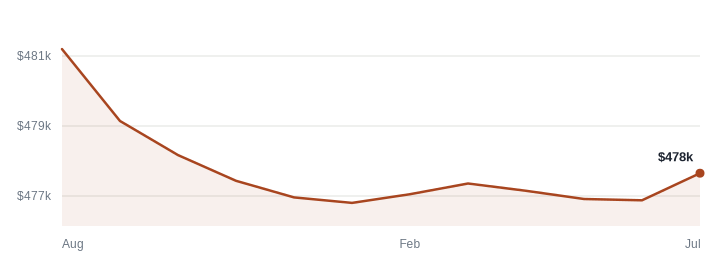
The typical home in Miami, FL is worth around $476,000, above the national typical value of $369,000. That value has fallen about 0.5% over the past year. It is a market-wide figure. A house that needs major work sits well below it, and a renovated one sits above.
The Miami market right now
- Typical home value
- $476,000
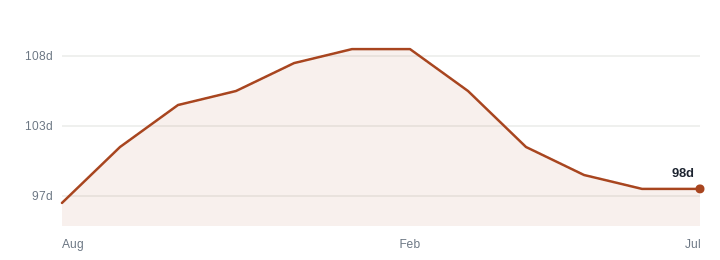
- Days to go under contract
- 98 days
- Listings cutting their price
- 18.9%
- Compared to nationally
- 29% higher
- Homes for sale
- 48,328
- New listings a month
- 8,487
- Months of supply
- 7.0
- Sales closing below asking
- 76.8%
-0.5% over the past year
+1% vs. a year ago
-2.6% vs. a year ago
National typical value is $369,000
-14% vs. a year ago
-3% vs. a year ago
Long queue, buyers can be selective
Nationally 50.0%
Miami, FL housing figures for August 2026, except the share closing below asking, which Zillow publishes a month behind and covers July 2026. Last refreshed September 17, 2026. Source: Zillow Research. Months of supply is calculated here as for-sale inventory divided by the monthly sales count. These are market-wide figures, not a valuation of any individual property.
What the Miami numbers mean for your sale
Houses here take about 98 days on average to go under contract. That is noticeably slower than the national figure of 53 days. Weigh that number carefully if you are paying a mortgage, taxes, insurance and utilities on a house you no longer want. Several months of those costs on a slow listing can quietly eat more than the gap between a cash sale and full price.
About 18.9% of listings in Miami have cut their asking price, below the national share of 26.4%. Few price cuts suggests sellers here price close to what the market will pay, and get it. That is a fair setting for listing a house in good shape.
Why sellers in Miami weigh this more carefully
In a slower market the comparison changes. The question is not just what a listing might fetch in the end. It is that price minus commissions, minus the repairs a buyer's lender will require, and minus several months of mortgage, taxes, insurance and utilities. Then allow for the real chance that the first buyer's loan falls through and the clock restarts. Run those numbers honestly before assuming listing is the better deal. Sometimes it still is, and we will tell you when we think so.
How the sale runs, from first call to closing, is on how it works. The side-by-side with listing through an agent, including the row where listing wins, is on cash offer vs realtor.
Miami-Dade has its own deed tax rate
Miami-Dade is the one Florida county with a different deed tax. Here the state charges 60 cents for each $100 of the price. Every other county pays 70 cents.
Miami-Dade also adds a surtax of 45 cents per $100 (Section 201.031, Florida Statutes). The surtax is not due when the deed transfers only a single-family dwelling.
The Clerk puts both in round numbers. The stamps are $6 per $1,000 of price. The surtax, when it applies, is $4.50 per $1,000.
Here is our own math on a $400,000 sale. A single-family house owes $2,400 in stamps. A duplex at the same price adds $1,800 of surtax, for $4,200 in all.
The contract decides who pays. The Department of Revenue says every party to the deed is liable for the tax, no matter who agreed to pay it.
Sources: Florida Department of Revenue: Documentary Stamp Tax; Florida Legislature: Section 201.031, Florida Statutes; Miami-Dade Clerk of the Court and Comptroller: Official Records.
Recording the deed with the Miami-Dade Clerk
The Clerk of the Court and Comptroller is the county's official recorder. Fees and transfer taxes are worked out and collected when the deed is recorded.
The Clerk lists what a deed needs:
- an original document signed by the seller
- two witnesses not tied to the sale, with names and addresses printed under their signatures
- a full notary acknowledgment
- a "prepared by" line and a property transfer form.
The Clerk also runs a free Property Fraud Alert. It emails you within 24 hours when a deed is recorded on the folio number you signed up.
One warning sign the Clerk lists is simple. Your property tax bills or notices stop coming.
Sources: Miami-Dade Clerk of the Court and Comptroller: Official Records; Miami-Dade Clerk of the Court and Comptroller: Property Fraud.
Building recertification for Miami condos and apartments
Miami-Dade makes older buildings pass a safety review at 30 years old. After that, it repeats every 10 years (Section 8-11(f), Code of Miami-Dade County).
Single-family homes and duplexes are exempt. So are buildings with an occupant load of 10 or less and 2,000 square feet or less.
Other owners get a Notice of Required Recertification. Reports are due within 90 days of that notice. A Florida-registered engineer or architect must certify the building is safe, both structurally and electrically.
Since January 2022, the county's guidelines ask for more, including:
- the whole facade, including cladding
- infrared checks on large electrical systems
- a look back through permit records
- unpermitted additions that could affect the structure.
If you are selling a condo unit or a small apartment building, expect a buyer to ask where it stands.
Miami-Dade tax bills and online foreclosure sales
The Tax Collector mails bills on or before November 1. Its 2024 notice lists these early payment discounts:
- 4 percent in November
- 3 percent in December
- 2 percent in January
- 1 percent in February.
Unpaid taxes become delinquent on April 1 of the next year. If you close between November and March, check which bill is paid and at what discount.
Foreclosure sales in Miami-Dade are held online. Bidders register on the Clerk's Official Foreclosure and Tax Deed Sales site.
If an auction brings in more than you owed, you may have surplus funds. The Clerk says to call its Foreclosure Unit within 10 days of the Certificate of Sale. Filing a claim may cost a $50 reopening fee.
The Clerk is clear that you do not need a lawyer to claim it. You also do not have to sign your rights over to anyone.
Sources: Miami-Dade Tax Collector: Save on property taxes, early payment discounts await (November 6, 2024); Miami-Dade Clerk of the Court and Comptroller: Mortgage Foreclosures.
Local facts checked October 2026. Rates and rules change; a real estate attorney or the office named above can confirm them for your property.
Markets near Miami
We buy across this whole region, including the towns between these metros.
- Cape Coral, FL122 mi
- North Port, FL152 mi
- Palm Bay, FL156 mi
- Lakeland, FL189 mi
- Tampa, FL212 mi
- Deltona, FL225 mi
Counties in Florida with their own page: Walton County, Bay County, Holmes County, Okaloosa County, Washington County.
Selling a house in Miami
- How much is the deed tax when I sell a house in Miami?
- In Miami-Dade, documentary stamps are 60 cents per $100 of the price, or $6 per $1,000. A 45 cent surtax per $100 is added unless the deed transfers only a single-family dwelling (Section 201.031, Florida Statutes).
- Does my Miami single-family house need a recertification before I sell?
- No. Miami-Dade County exempts single-family homes and duplexes from its building recertification program. The program covers other buildings at 30 years old and every 10 years after that. Small buildings with 10 or fewer occupants and 2,000 square feet or less are also exempt.
- How do I claim surplus money after a Miami-Dade foreclosure sale?
- Call the Clerk's Foreclosure Unit within 10 days of the Certificate of Sale to ask if there is a surplus. You may be charged a $50 reopening fee. The Clerk says you do not need a lawyer and do not have to assign your rights to anyone.
Tell us what you need for your Miami house
Two minutes to ask, no obligation, and no fee whatever you decide. If we are not the right answer, we will say so.

Sabrina usually picks up. (615) 576-8827