Sell a house that needs repairs
If you want to sell a house that needs repairs, the obstacle is usually not the buyer. It is their bank. Someone can love the house and still not be able to close. A lender will not fund a house with an active roof leak, a failed system, or a structural problem. That is why houses like this sit. It says nothing bad about the house or about you.
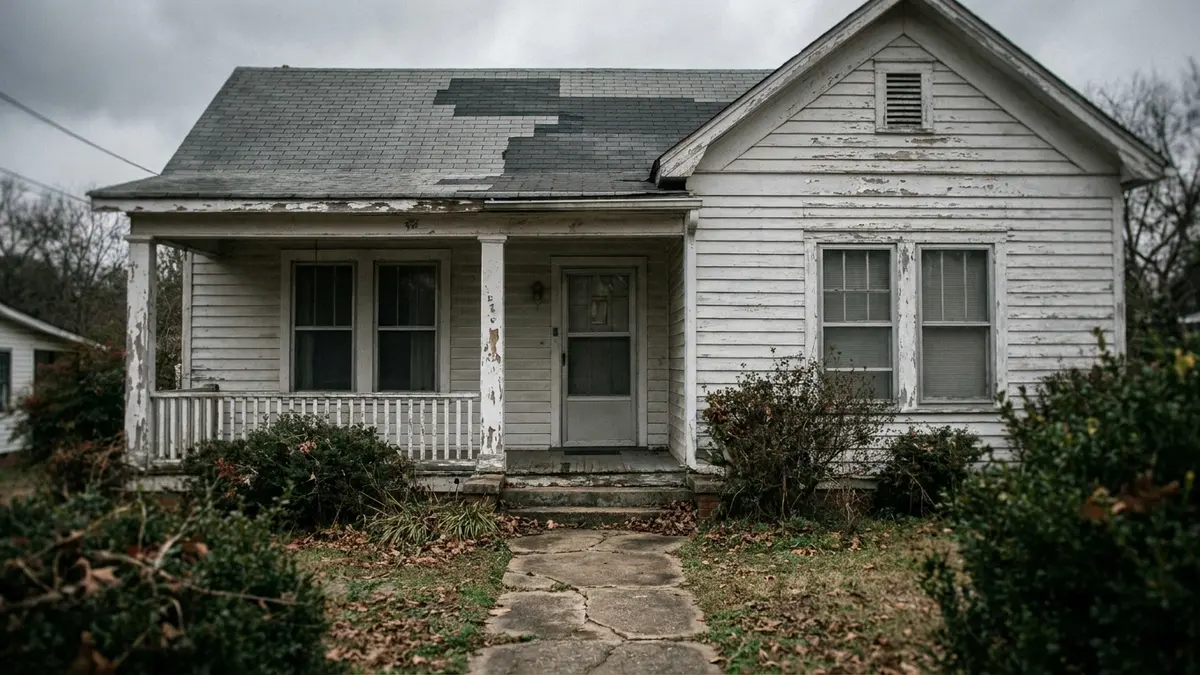
The financing wall, and why price cuts do not fix it
Conventional and government-backed loans have minimum property condition standards. The appraiser flags the problems, and the lender wants them fixed before it funds. So the seller is asked to pay for repairs before the sale has even happened. Cutting the price does not solve this. The issue is not the number. The loan simply cannot fund. So houses that need real work sit for months, then sell to a cash buyer anyway, after several wasted price cuts.
What to know
You do not need estimates, and you should not pay for them
A common and costly mistake is paying contractors to bid on work you will never have done. We judge the condition ourselves and pay for our own inspection. Whatever it finds is our problem. We do not use it to renegotiate.
Structural and water issues are the usual dealbreakers
Foundation movement, roof failure, and anything with standing water tend to end normal sales outright. They are also the jobs contractors quote at wildly different prices. That is why sellers get pulled back and forth trying to decide whether to fix them.
Half-finished renovations are worth less than untouched houses
A gutted bathroom or a room framed but never finished is harder to sell than the original. Buyers cannot picture it, lenders will not fund it, and permits may have expired. If somebody started work and stopped, that is a normal house for us to buy.
Disclosure still applies, and honesty is genuinely easier
Most states require sellers to disclose known material defects. That does not go away with a cash sale. Tell us the worst of it up front. We would much rather price it in at the start than find it later. A deal that gets renegotiated at the last minute helps nobody.
Insurance claims and open permits travel with the house
If there is an open insurance claim, or a permit that was pulled and never closed out, mention it early. These can be solved at closing, but they take a few extra days. They also catch people off guard when they turn up in the title search.
This is general information based on what we see in this situation regularly. It is not legal, tax, or financial advice, and the rules differ meaningfully from state to state. Talk to an attorney or a CPA about your specific circumstances.
How we handle this specifically
- We buy in truly any condition. Fire damage, mold, hoarding, structural movement, and total gut jobs are all normal for us.
- We pay for our own inspection, and we do not use it to renegotiate. If we agreed on your number, that is the number we close on. The only exception is something big you did not tell us about.
- No cleaning, no staging, no showings. One visit, not fifteen.
- If the repairs are cosmetic and the market is strong, listing will usually net you more. We will tell you that instead of taking the deal.
How selling to us actually works
Tell us about the house, and your number
The address, a rough idea of its condition, and what you need to get for it. No photos, appraisal, or repair estimates needed, and nothing has to be cleaned up first.
About 2 minutes
We check whether your number works
We look up recent sales of similar homes nearby and see the house ourselves. Then we check the math against your number. It takes one walkthrough, at a time that suits you, and we pay for any inspection.
Usually within 24 to 48 hours
You get a straight answer, not a pitch
Either yes, we can do your number, or no, we cannot, and here is exactly where the gap is. You get it in writing, with no pressure and no deadline games. If it works, a title company handles closing and you pick the date.
Close in about 1 to 3 weeks, or later if you prefer
Common questions
- Do I need to fix anything at all before selling?
- No. Not the roof, not the plumbing, not the peeling paint. We buy the house in the condition it is in today.
- What if the house has mold or fire damage?
- Both are normal for us. Tell us what happened and whether you filed an insurance claim. We will factor it in before we answer on your number.
- Will you come back with a lower number after the inspection?
- Not for things we could see or that you told us about. We inspect to plan the renovation, not to renegotiate. The exception is a big problem nobody mentioned. That is why we ask you to be direct early.
- The house is a hoarder property. Is that a problem?
- No. Leave the contents. We clear it out after closing, and you do not need to be there for any of it.
Related situations
Inherited a property
Often shared between siblings, full of belongings, and costing money every month.
Vacant or unwanted house
Empty houses deteriorate faster and cost more to insure than people expect.
Facing foreclosure
There is usually more time and more equity left than lenders make it feel like.
We handle this in every market we buy in
Talk to us before you decide anything
You do not need a number ready, or photos, or a plan. Want to know your real options, even the ones that do not involve us? Call and ask.

Sabrina usually picks up. (615) 576-8827