Sell an inherited house
Nobody plans to sell an inherited house. It tends to arrive with three problems at once. The house has not been updated in decades. The rooms are still full of someone's belongings. And other people have to agree before anything can happen. You do not have to clear it out or fix it. If the heirs are not speaking, we work around that all the time. It is not a reason to wait.
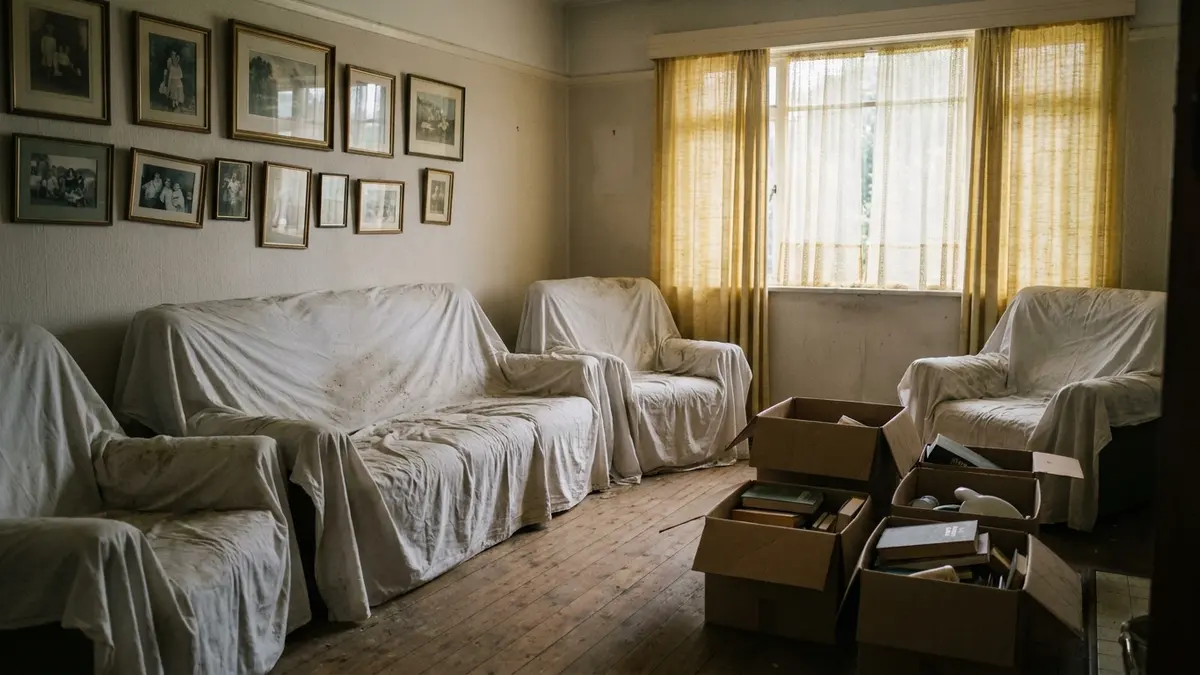
Why inherited properties stall on the open market
Buyers with a mortgage need the house to meet their lender's condition rules. Inherited homes often have put-off maintenance, older systems, or a roof near the end of its life. Those are exactly the things that make an appraisal come back with required repairs. Nobody wants to pay to renovate a house they are trying to let go of. So the listing sits, the price drops, and it sits again.
What to know
Leave everything in the house
Take what matters to you and leave the rest. Furniture, clothes, decades of stored boxes, a garage nobody has opened: all of it can stay. Clearing out a family home is draining work, and it is fine to skip it. We handle the cleanout after closing.
The tax basis usually steps up at the date of death
In the United States, inherited property generally gets a stepped-up cost basis. That basis is its fair market value as of the date of death. In practice, heirs often owe far less capital gains tax than they expect. Sometimes they owe none at all if they sell close to that date. Spend ten minutes with a CPA before you decide anything. It can change the whole picture.
Find out whether probate is actually required
Not every inherited house has to go through full probate. It may pass outside probate entirely. That can happen if it was held in a living trust or owned jointly with right of survivorship. A transfer-on-death deed can do the same. Some states also offer a simpler process for smaller estates. Knowing which one applies can change your timeline by months.
Every heir on title has to sign
If the house passed to several siblings, all of them are on the deed. All of them must sign to sell. That is not a problem. It just means the conversation needs to happen early. Families usually find one clean cash number easier to accept than a months-long listing where the price keeps changing.
The carrying costs are real and they compound
Property taxes, insurance on an empty home, utilities left on to protect the pipes, and lawn care add up fast. Vacant-home insurance costs more than a standard policy. Many standard policies also lapse once a house has been empty for 30 or 60 days.
This is general information based on what we see in this situation regularly. It is not legal, tax, or financial advice, and the rules differ meaningfully from state to state. Talk to an attorney or a CPA about your specific circumstances.
How we handle this specifically
- We buy with everything still inside. You never have to organize a cleanout or an estate sale.
- We work with estate attorneys and several heirs all the time. If needed, we can hold a closing date until probate clears.
- One number, agreed once, that the family can divide. No price cuts three months in.
- If the estate would net a lot more by listing, we will say so. For an updated house in a fast market, that is often true.
How selling to us actually works
Tell us about the house, and your number
The address, a rough idea of its condition, and what you need to get for it. No photos, appraisal, or repair estimates needed, and nothing has to be cleaned up first.
About 2 minutes
We check whether your number works
We look up recent sales of similar homes nearby and see the house ourselves. Then we check the math against your number. It takes one walkthrough, at a time that suits you, and we pay for any inspection.
Usually within 24 to 48 hours
You get a straight answer, not a pitch
Either yes, we can do your number, or no, we cannot, and here is exactly where the gap is. You get it in writing, with no pressure and no deadline games. If it works, a title company handles closing and you pick the date.
Close in about 1 to 3 weeks, or later if you prefer
Common questions
- Can I sell an inherited house before probate is finished?
- Sometimes. It depends on your state and on whether the executor has authority to sell. We can sign a contract now and set the closing for after probate clears. That way the sale is lined up and waiting instead of starting from scratch.
- Do I have to clean the house out first?
- No. Take what you want and leave the rest, including furniture and personal belongings. We handle it after closing.
- What if my siblings and I disagree about selling?
- Everyone on title has to sign, so you do need to agree. It often helps to have one real number to talk about, instead of arguing about what the house might be worth.
- Will I owe capital gains tax?
- Often far less than people expect. Inherited property generally gets a stepped-up basis to its value at the date of death. Check your own situation with a CPA, since we are not tax advisors.
Related situations
Vacant or unwanted house
Empty houses deteriorate faster and cost more to insure than people expect.
House needs major repairs
Roof, foundation, mold, or a renovation somebody started and never finished.
Divorce or separation
One clear number and a firm date, so both parties can move on.
We handle this in every market we buy in
Talk to us before you decide anything
You do not need a number ready, or photos, or a plan. Want to know your real options, even the ones that do not involve us? Call and ask.

Sabrina usually picks up. (615) 576-8827