How long does it take to sell a house in Cape Coral, FL?
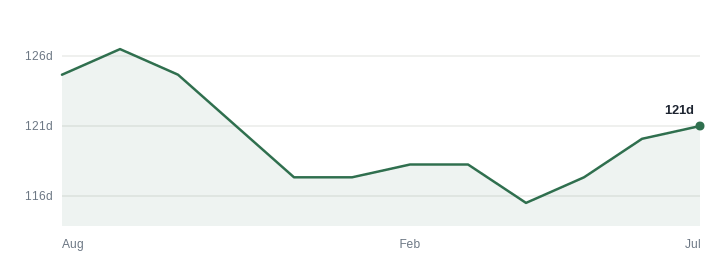
A house listed in Cape Coral, FL takes about 119 days on average to go under contract. That is slower than the national average of 53 days. Closing then usually adds another 30 to 45 days. That is how long a buyer with a mortgage usually needs to fund, though it varies by lender and by how complex the sale is. So a normal sale here realistically runs about 149 to 164 days, from the day the sign goes up to the day the money arrives. That is before any time spent getting the house ready to list.
That makes Cape Coral the 2nd slowest of the 100 largest US metro markets. Every nearby market we track moves faster, including North Port at 91 days and Lakeland at 80 days, so a house here waits longer than one a short drive away.
Market figures below cover August 2026 and were last refreshed on September 17, 2026.
- Listing to under contract
- 119 days
- Under contract to closing
- 30 to 45 days
- Realistic total
- 149 to 164 days
- Selling to us instead
- 1 to 3 weeks
Measured, market-wide average
Estimate, set by the buyer's lender
Before any time spent preparing to list
Paced by the title search, not financing
What is driving the timeline in Cape Coral specifically
Cape Coral has about 7.5 months of supply, so buyers have a long list to choose from. The houses that sit are the ones that need work. A buyer with that much choice just moves on to the next listing.
About 21.2% of listings here have already cut their asking price. Each one started at a price the market would not pay, and finding that out added weeks. Pricing right on day one is the biggest thing a seller controls.
About 81.5% of completed sales closed below the asking price, so plan for the haggling as well as the wait. The listed price and the final price are different numbers.
If a sale falls apart over financing or inspection, the house goes back on the market and the clock starts over. That is why an average is a poor guide to the worst case, in Cape Coral as anywhere else.
Months of supply is for-sale inventory divided by the monthly sales count, both from Zillow Research for August 2026. The typical home in Cape Coral is worth about $335,000.
Florida's flood form comes before the contract
Florida law asks the seller of a home to fill out a flood disclosure form. You must give it to the buyer at or before the time the sales contract is signed (Fla. Stat. 689.302).
The form asks three questions about your time as owner:
- whether you know of flooding that damaged the house
- whether you filed a flood claim, such as with the National Flood Insurance Program
- whether you got flood aid, such as from FEMA.
The law counts three things as flooding. These are rising inland or tidal water, sudden runoff from a stream or ditch, and standing rain water that stays for a long time.
Pull your claim and FEMA letters together early. Then the form is ready the day an offer comes in.
Sources: Florida Legislature: Section 689.302, Disclosure of flood risks to prospective purchaser.
Look up your elevation certificate before a buyer asks
The City of Cape Coral says most of its residents live in a Special Flood Hazard Area. Those are the A and V zones on the flood map. The city also says flood insurance is required for many owners.
The city's Forerunner portal works with any address. It shows the flood zone and the base flood elevation. You can also search it for an existing elevation certificate, which can save the cost of a new one.
New FEMA flood maps for Lee County took effect on November 17, 2022. If you think your lot sits above flood level, the city takes map change requests, called a LOMA or LOMR-F, through its permit portal.
Sources: City of Cape Coral: Flood Protection; City of Cape Coral: Cape Coral Announces Flood Risk Information Portal.
Which tax month your closing lands in
Florida property taxes come due on November 1 each year, or once the tax roll reaches the tax collector. They become late on April 1 of the next year, or 60 days after the bill is mailed if that is later (Fla. Stat. 197.333).
Paying early earns a discount (Fla. Stat. 197.162):
- 4 percent in November
- 3 percent in December
- 2 percent in January
- 1 percent in February
- no discount in March.
Unpaid taxes move fast after that. By June 1, or the 60th day after the taxes went late if that is later, the tax collector sells tax certificates on the home. The amount owed adds interest at 18 percent a year (Fla. Stat. 197.402).
By our own reading of those dates, a closing from November through March lands while that year's bill can still be paid without a penalty.
Sources: Florida Legislature: Section 197.333, When taxes due; delinquent; Florida Legislature: Section 197.162, Tax discount payment periods; Florida Legislature: Section 197.402, Advertisement of real or personal property with delinquent taxes.
When the owner has passed away
Florida has a shorter court process called summary administration. It can be used when the estate, minus property that creditors cannot reach, is worth $150,000 or less. It can also be used when the owner died more than 2 years ago (Fla. Stat. 735.201).
It is not open if the will calls for full administration under Florida's probate code.
In a full probate case, most creditor claims must be filed within 3 months after the notice to creditors is first published. A creditor who must be served a copy gets 30 days from service if that is later (Fla. Stat. 733.702).
Plan your closing date with that window in mind. A real estate attorney can confirm which path fits your family.
Sources: Florida Legislature: Section 735.201, Summary administration; nature of proceedings; Florida Legislature: Section 733.702, Limitations on presentation of claims.
Local facts checked October 2026. Rates and rules change; a real estate attorney or the office named above can confirm them for your property.
If the timeline is the problem
Selling to a cash buyer skips both the listing period and the lender. That cuts the 149 to 164 days to about one to three weeks, set by the title search rather than a loan. The trade is a lower price for a date you can count on. Whether that is worth it depends on what holding costs are doing to you meanwhile. It also depends on whether a Cape Coral buyer would have to take on work to buy your house.
See how we buy houses in Cape Coral, FL, or read the full comparison against listing with an agent, which keeps its losing row.
Common questions
- How long does it take to sell a house in Cape Coral?
- About 119 days on average to go under contract. Then it takes roughly 30 to 45 more days to close if the buyer has a mortgage. That puts a typical sale at about 149 to 164 days from listing to closing. That does not count time spent getting the house ready to list.
- When do I have to give a buyer the Florida flood disclosure?
- At or before the time the sales contract is signed (Fla. Stat. 689.302). The form asks about flood damage while you owned the house, any flood insurance claims, and any FEMA or other flood aid.
- Can summary administration be used for my parent's Cape Coral house?
- It may be. Florida allows it when the estate, minus property exempt from creditors, is $150,000 or less, or when the owner died more than 2 years ago (Fla. Stat. 735.201). A real estate attorney can confirm whether your estate qualifies.
- When do Cape Coral property taxes become late?
- Florida taxes come due November 1. They become late on April 1 of the next year, or 60 days after the bill is mailed if that is later (Fla. Stat. 197.333). Paying in November earns a 4 percent discount.
Selling timelines in nearby markets
- North Port, FL about 91 days to contract
- Augusta, GA about 59 days to contract
- Columbia, SC about 53 days to contract
- Birmingham, AL about 49 days to contract
- Greenville, SC about 57 days to contract
- Chattanooga, TN about 61 days to contract
Tell us what you need for your Cape Coral house
You do not need a number ready, or photos, or a plan. Want to know your real options, even the ones that do not involve us? Call and ask.

Sabrina usually picks up. (615) 576-8827